Tuckpointing and Brick Repointing
Tuckpointing and brick repointing for Gilbert chimneys: how failing mortar joints are cut out and refilled to keep water out and hold the brick together.
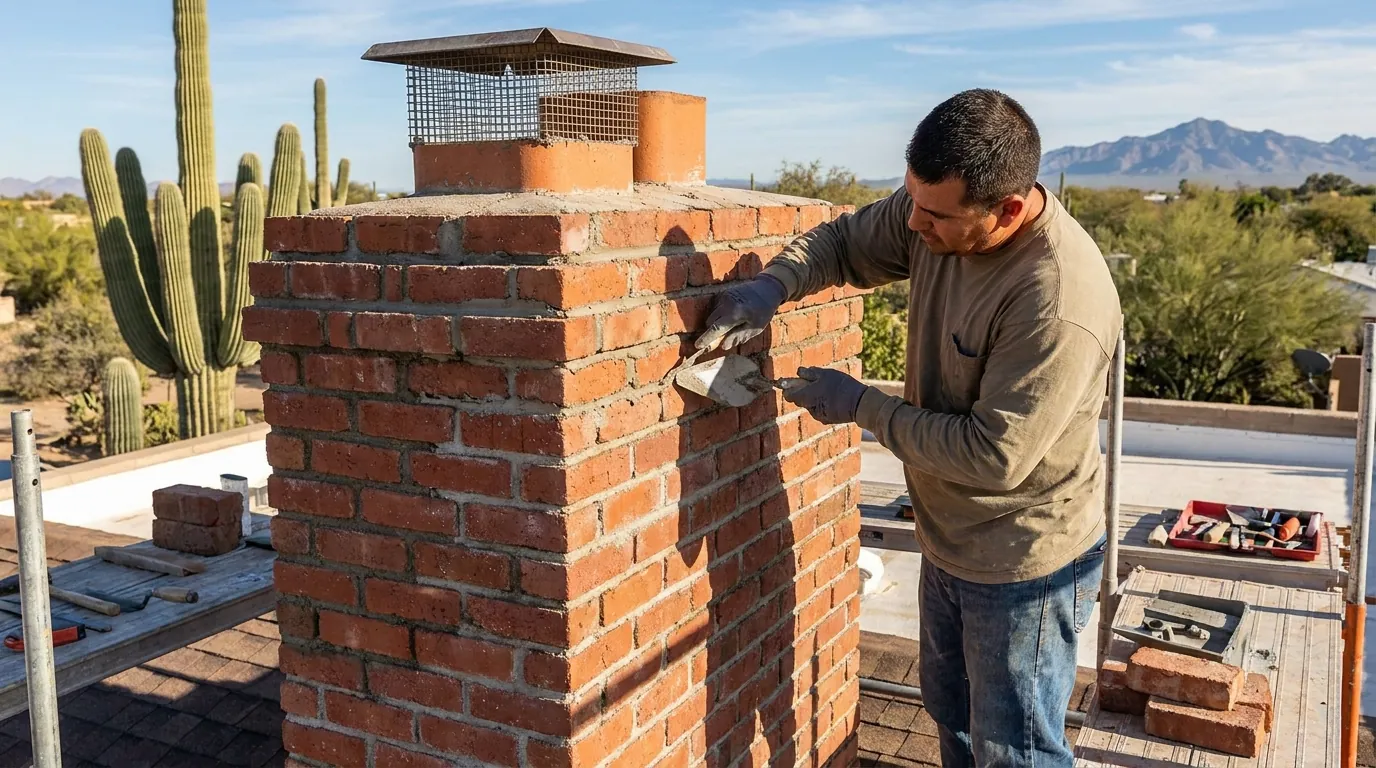
The joints fail before the brick does
On most chimneys, the mortar is the first thing to go. It is softer than the brick by design, so it takes the wear and can be renewed without disturbing the units around it. When those joints erode, though, they stop shedding water and start holding it, and that water is what eventually attacks the brick itself. Repointing removes the failed mortar and refills the joints with fresh mortar; tuckpointing is the same repair finished to a crisp, uniform line for appearance.
You can usually spot the need for repointing from the ground. Look for joints that have recessed noticeably behind the face of the brick, mortar you can crumble or dig out with a screwdriver, hairline gaps at the joint edges, and sandy grit collecting at the base of the chimney or on the roof below it. White powdery staining is a sign water is moving through the masonry and pulling salts out with it. Catching this stage matters, because sound brick with bad joints is a repointing job, while brick that has started to spall may push you toward a chimney rebuild above the roofline.
How repointing is done
Good repointing is careful, unglamorous work — the difference between a lasting repair and a smear of mortar is entirely in the preparation.
-
Rake out the failed joints
Deteriorated mortar is cut out to a consistent depth — deep enough for the new mortar to key in, without undercutting the brick. Grinding is done carefully so the brick edges are not chipped.
-
Match the mortar
We match the new mortar to the hardness and color of the original. Using a mortar that is too hard on softer, older brick causes the brick to spall, so the mix matters as much as the technique.
-
Pack and tool the joints
Fresh mortar is packed into the raked joints in lifts and tooled to match the original profile, which sheds water and gives the finished line its clean appearance.
-
Clean and cure
Excess mortar is cleaned off the brick faces before it sets, and the new work is kept damp as it cures so it develops full strength rather than drying out too fast.
Why Gilbert joints wear the way they do
Two things drive mortar failure in this climate. The first is the daily temperature swing: brick and mortar expand under the desert sun and contract as the night cools, and that constant movement fatigues the joint over years. The second is the monsoon. During those storms, wind-driven rain hits the chimney hard and fast, and eroded joints soak it up instead of shedding it. Come winter, any moisture trapped in a joint that freezes overnight expands and pries the mortar apart from the inside — the freeze-thaw cycling that opens hairline cracks into gaps.
Repointing at the right time is the cheapest way to protect a chimney, because it keeps water out of the brick before the brick starts to fail. Once you are refilling joints, it is worth checking the top of the chimney too — a cracked crown or worn cap lets water in from above no matter how good the joints are, so chimney crown and cap replacement often pairs with repointing to seal the whole stack.
Catch the joints before the brick
If the mortar on your chimney looks recessed, crumbly, or cracked, repointing now is far cheaper than a rebuild later. Ask for a look and an honest recommendation.
Serving Gilbert and the surrounding East Valley.
Frequently asked questions
What is the difference between repointing and tuckpointing?
Repointing is the repair itself — removing failed mortar and refilling the joints. Tuckpointing refers to finishing those joints to a crisp, uniform line, often for appearance. In everyday use the terms are frequently interchanged.
Can repointing fix a chimney that is already crumbling?
Repointing restores the joints when the brick is still sound. If the brick faces are spalling or units are loose, repointing alone will not hold and a partial rebuild is usually needed.
Why does matching the mortar matter so much?
Mortar that is harder than the surrounding brick forces the brick to absorb movement it cannot handle, which causes spalling. Matching the mortar to the age and hardness of the original masonry protects the brick and lets the joint wear as intended.
How often do chimney joints need repointing in Gilbert?
It varies with the age of the masonry, the original mortar, and exposure, but the temperature swings and monsoon rains here tend to shorten the interval. The right time is when joints begin to recess and mortar can be crumbled by hand — not on a fixed schedule.