Chimney Crown and Cap Replacement
Chimney crown repair and cap replacement in Gilbert: how a cracked crown or missing cap lets water in, and how replacing them protects the masonry below.
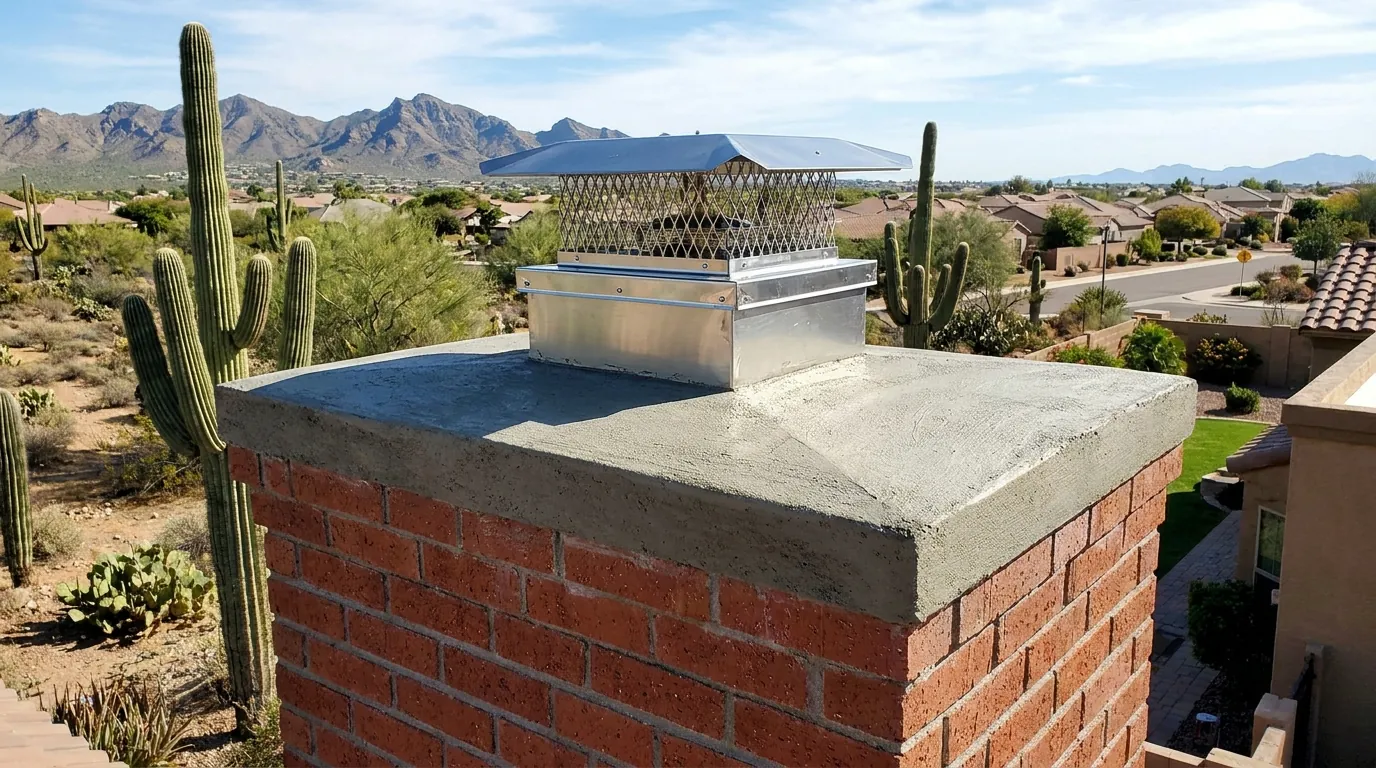
The top of the chimney is the first line of defense
The crown is the sloped concrete slab at the very top of the masonry that sheds water away from the flue and the brick. The cap is the metal cover that sits over the flue opening to keep rain, debris, and animals out while letting smoke escape. Together they are the chimney's roof, and when either one fails, water starts working its way down into the crown, the joints, the flue, and the brick — often for years before anyone notices a stain on a ceiling inside.
Crown failure shows up as cracks radiating across the slab, chunks that have broken loose at the edges, or a surface that has crazed and started to hold water instead of shedding it. A cap problem is more obvious: a missing or rusted-through cap, a cap that has blown loose in a monsoon gust, or bird and rodent activity inside the flue. If you are already seeing water stains or a musty smell after rain, the trouble may have moved beyond the top — that is a job for chimney flashing and leak repair to trace and stop.
What crown and cap replacement involves
Crown repair ranges from sealing minor cracks to pouring a full new crown; the right choice depends on how far the failure has gone.
-
Evaluate the crown
We check whether the existing crown can be repaired with a crack sealant and coating, or whether it has failed to the point that it needs to be broken out and re-poured.
-
Pour a proper crown
A new crown is formed with an overhang and a slope that carries water clear of the brick, and a bond break around the flue so the crown and flue can move independently without cracking.
-
Fit the new cap
A stainless cap sized to the flue is fitted and secured to withstand monsoon winds, keeping rain, embers, and animals out while venting freely.
-
Cure and seal
Fresh crown concrete is kept damp as it cures in the desert heat so it gains strength, and the finished crown can be sealed to resist water absorption.
Why crowns crack in the desert
A chimney crown lives through the harshest version of Gilbert's climate. It bakes flat under the summer sun, takes the full force of monsoon rain, and cools sharply on winter nights. Concrete that absorbs water and then freezes even slightly on a cold night expands from within, and that freeze-thaw cycling is the classic cause of the spider-web cracks you see on older crowns. A thin crown poured without a proper overhang or bond break is especially prone to it, because it cracks where it meets the flue and then channels water straight into the masonry.
Replacing the crown and cap is one of the highest-value repairs on a chimney because it protects everything underneath. A sound crown keeps water off the joints, so a fresh crown often follows or accompanies tuckpointing and brick repointing. If the flue itself has been exposed to years of moisture from a failed crown, it is worth checking whether it needs stainless steel flue relining as well.
Stop the water at the top
A cracked crown or missing cap is a small repair that prevents an expensive one. Ask us to evaluate the top of your chimney before the next monsoon season.
Serving Gilbert and neighboring East Valley towns.
Frequently asked questions
What is the difference between a chimney crown and a chimney cap?
The crown is the sloped concrete slab at the top of the masonry that sheds water off the chimney. The cap is the metal cover over the flue opening that keeps rain, embers, and animals out while letting smoke escape.
Can a cracked crown be sealed instead of replaced?
Minor cracks can sometimes be sealed and coated to buy years of service. Once a crown has broken apart, lost its overhang, or crazed across the whole surface, sealing no longer holds and pouring a new crown is the lasting fix.
Do I really need a cap if I rarely use the fireplace?
Yes. A cap keeps rain out of the flue, blocks birds and rodents from nesting inside, and stops debris from collecting. Without one, water enters the flue directly and works down into the masonry regardless of how often you light a fire.
Why do chimney crowns crack so often here?
Crowns take the full swing of desert weather — intense summer heat, hard monsoon rain, and cool nights. Water absorbed into the concrete expands when temperatures drop across the freeze line, and that repeated cycling cracks crowns over time, especially thin ones without a proper overhang.