Chimney Flashing and Leak Repair
Chimney flashing repair and leak repair in Gilbert: how to find where the water gets in around your chimney and stop it before it damages the ceiling below.
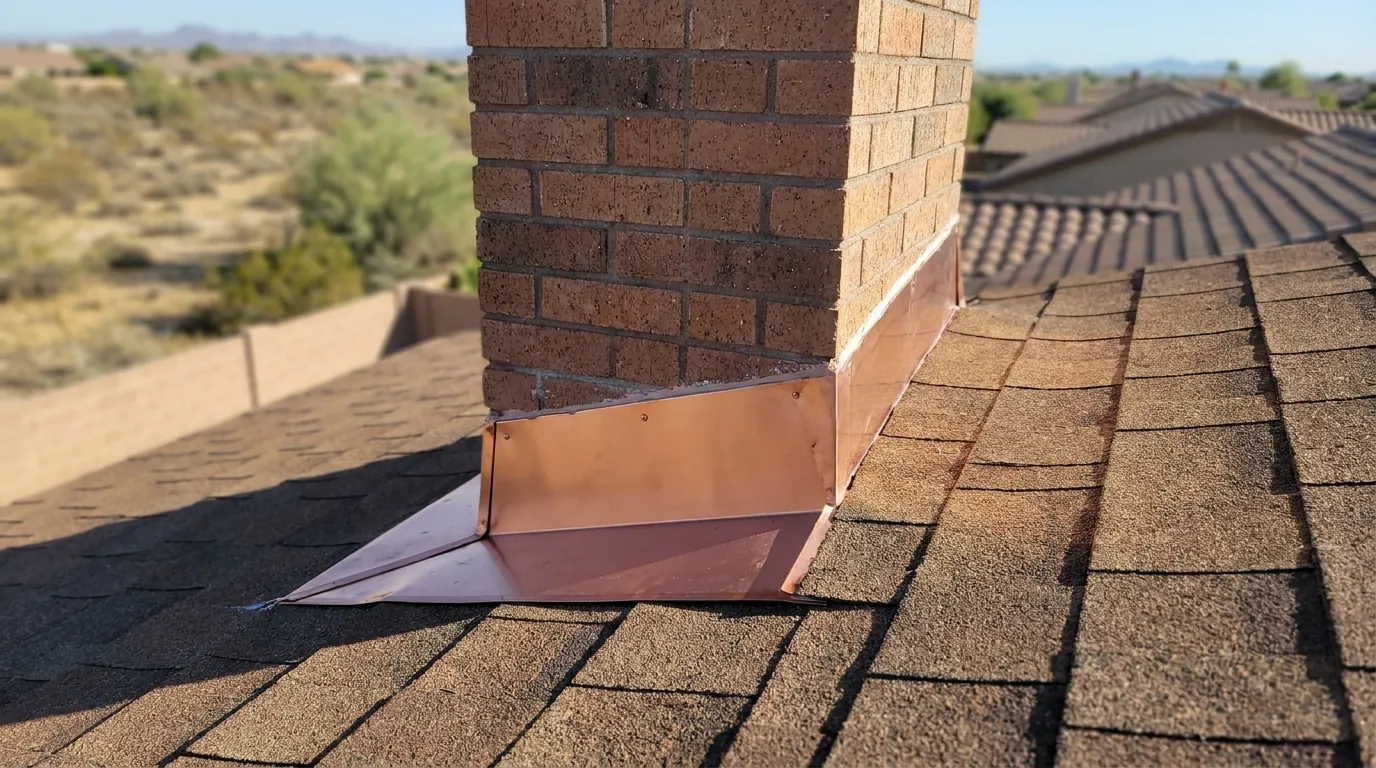
Where chimney leaks actually come from
Flashing is the layered metal that seals the joint where the chimney passes through the roof. It is one of the most common places a chimney leaks, because it has to bridge two materials that expand and move differently — masonry and roofing — while staying watertight through years of weather. When flashing lifts, corrodes, pulls loose, or was sealed only with caulk that has since dried and cracked, water follows the chimney down into the roof deck, the ceiling, and the framing.
The signs of a flashing leak are familiar: water stains on the ceiling near the chimney, a damp or musty smell after rain, rust streaks or peeling paint on the chimney chase inside, and daylight or lifted metal visible at the flashing on the roof. Because water travels before it drips, the stain inside is often some distance from the actual entry point. Chimney flashing repair is about finding the real path and closing it, not just chasing the stain. If the leak turns out to be coming from the top rather than the roofline, chimney crown and cap replacement may be the fix instead.
How flashing and leak repair works
Stopping a chimney leak starts with diagnosis — flashing repair only holds if it addresses the actual entry point.
-
Trace the leak
We inspect the flashing, the crown, the cap, and the masonry joints to find where water is actually entering, since a stain inside rarely sits directly under the leak.
-
Repair or replace the flashing
Depending on condition, the flashing is re-secured and re-sealed, or the failed metal is replaced with new step and counter flashing properly integrated into the masonry and roofing.
-
Seal the transition
The joint where flashing meets the brick is tied in and sealed so wind-driven rain cannot get behind it — a common weak point in older, caulk-only repairs.
-
Address contributing sources
If the crown, cap, or joints are also letting water in, we address those too, because sealing the flashing alone will not stop a leak that has more than one source.
Why leaks show up in Gilbert's monsoon
Homeowners here often notice a chimney leak for the first time during monsoon season, and there is a reason. These storms drive rain sideways at high speed, so water is pushed against and behind flashing that would shed a gentle rain without complaint. A caulk-only flashing seal that has baked and cracked under months of summer sun is exactly the kind of repair that holds until the first hard monsoon and then fails. The intense UV and heat here shorten the life of sealants and can loosen fasteners over time, so flashing that looked fine last year may not be watertight this year.
Leaks rarely have a single cause, which is why diagnosis matters. Water that has been entering around the flashing has often also been soaking the masonry, so tuckpointing and brick repointing is sometimes part of a lasting fix. And if the flue has been exposed to that moisture for a long time, it is worth confirming it does not also need stainless steel flue relining.
Chasing a leak near the chimney?
If you see a stain, a smell, or damage after rain, let us trace it to its real source and stop it before the next monsoon makes it worse.
Serving Gilbert and the surrounding East Valley communities.
Frequently asked questions
How do I know my leak is coming from the chimney flashing?
Flashing leaks typically show as ceiling stains near the chimney, damp smells after rain, and rust or lifted metal at the roof joint. Because water travels before it drips, a proper inspection of the flashing, crown, cap, and joints is what confirms the source.
Can flashing just be re-caulked?
Caulk alone is a short-term measure that tends to fail under Gilbert's sun and hard monsoon rain. Lasting flashing repair means re-securing or replacing the metal and integrating it properly into the masonry and roofing rather than relying on sealant.
Why does my chimney leak in the rain but seemed fine before?
Wind-driven monsoon rain is pushed against and behind flashing that would shed a light rain, and sealants that have baked in the summer heat crack and let water in. A leak that appeared this year often reflects flashing that quietly failed over the previous seasons.
What if fixing the flashing does not stop the leak?
Chimney leaks often have more than one source. If the crown, cap, or mortar joints are also letting water in, those need to be addressed as well, which is why diagnosis before repair is so important.