Chimney Rebuild Above the Roofline
Chimney rebuild above the roofline for Gilbert homes: when spalling brick and failed mortar mean rebuilding is the only lasting fix, and what the work involves.
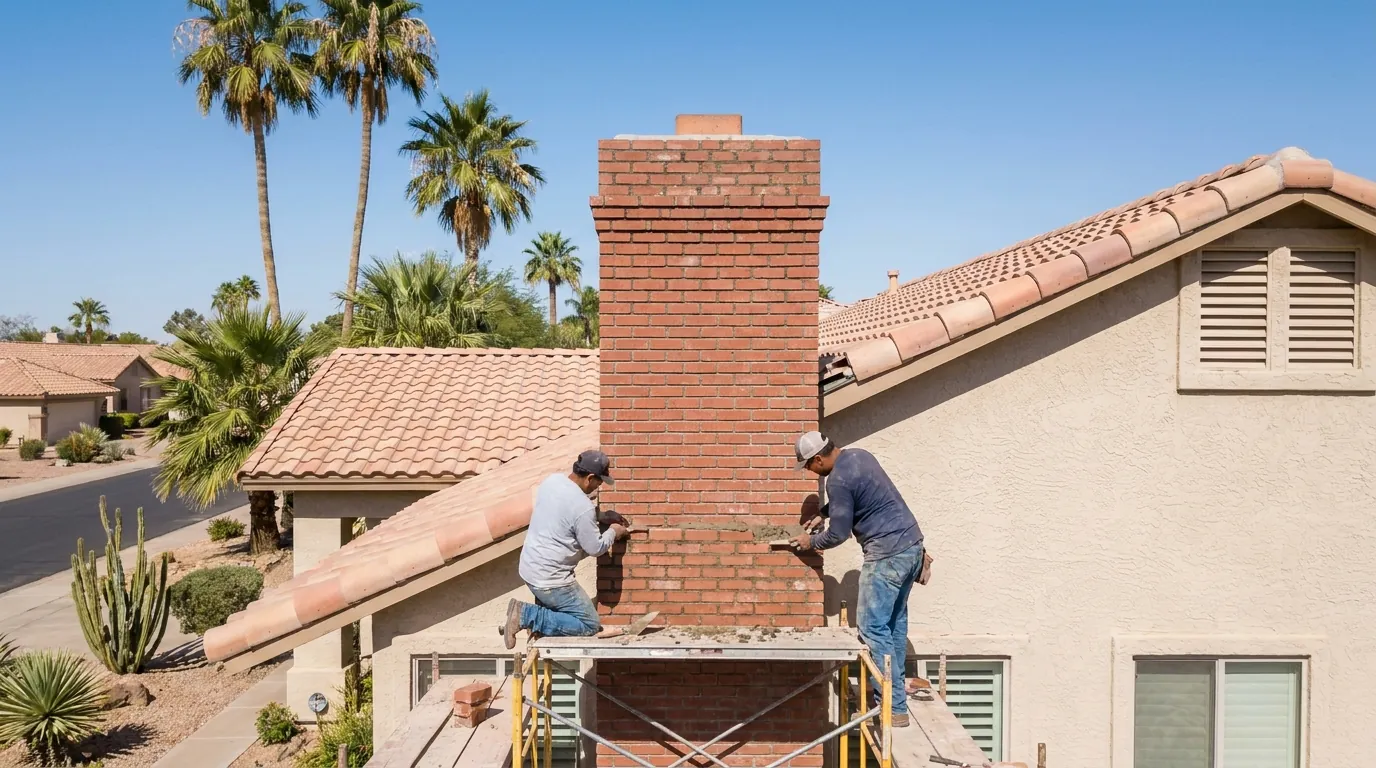
When a rebuild is the right call
The section of a chimney that stands above the roofline takes the worst of Gilbert's weather. It has no wall behind it to lean on and no attic warmth to keep it dry, so every monsoon downpour, every run of summer heat, and every cool desert night that swings temperatures across the freeze line works on the brick and mortar from all four sides at once. When that exposed stack starts leaning, when the mortar joints have washed out to a finger's depth, or when the brick faces are flaking and crumbling, patching stops making sense. A rebuild replaces the failed masonry with sound units and fresh mortar.
The warning signs are usually visible from the ground or the roof: bricks that have lost their outer face (spalling), a stack that no longer stands plumb, white staining where salts have leached out of saturated masonry, and gaps you can see daylight or sky through at the joints. Loose brick fragments landing in the gutter or on the roof are a clear signal the top courses are letting go. Once several courses are compromised, rebuilding is both safer and more cost-effective than chasing repairs course by course.
What a rebuild involves
A rebuild above the roofline follows a predictable sequence, tailored to how far down the damage runs.
-
Assessment and takedown point
We identify the lowest course of sound masonry and mark the takedown line there. Everything above that line comes down by hand so the surrounding roof and flashing are not damaged in the process.
-
Salvage and material match
Where the existing brick is a discontinued size or color, we source the closest match so the rebuilt stack reads as part of the house rather than a patch. Mortar is mixed to suit the era and hardness of the original masonry.
-
Laying the new stack
Courses are laid plumb and level, with proper head and bed joints, back up to the original height. Flue tiles or a liner are set and supported as the brick rises around them.
-
Crown, cap and flashing
A rebuild is the natural time to pour a fresh crown, fit a new cap, and re-tie the flashing so water is kept out at every joint the new work creates.
How Gilbert conditions shape the work
Gilbert's arid heat is hard on mortar in a way people underestimate. Fresh mortar needs to cure with moisture, and in July that moisture can flash off before the mix has developed strength, leaving weak, dusty joints. We schedule and cure rebuilds to account for that, which sometimes means shading the work and misting the masonry as it sets. The monsoon brings the opposite problem: wind-driven rain that drives sideways into a stack and finds any open joint. A rebuild done right seals those paths for good.
The temperature swing between a 105-degree afternoon and a cool desert night moves water in and out of brick pores, and any freeze on a winter night expands it. That freeze-thaw cycling is what spalls the faces off older, softer brick. A rebuild lets us replace those failing units and repoint the transition where the new stack meets sound masonry. If your damage stops short of a full rebuild, tuckpointing and brick repointing may restore the joints instead, and a fresh chimney crown and cap replacement often extends the life of the masonry below it.
Not sure if you need a rebuild?
Send us photos of the stack or ask for a look. We will tell you honestly whether repointing will hold or whether the section above the roofline needs to come down and go back up.
Serving Gilbert and nearby communities across the East Valley.
Frequently asked questions
How do I know if my chimney needs a full rebuild instead of a repair?
If several courses of brick are spalling, the stack is leaning, or the mortar has eroded deep into the joints across most of the exposed section, a rebuild is usually the right answer. When damage is limited to surface joints on otherwise sound brick, repointing can often restore it instead.
Will the rebuilt chimney match the rest of my house?
We source brick that matches the size and color of your existing masonry as closely as the market allows, and mix mortar to suit the original. On older brick that has been discontinued, a perfect match is not always possible, but the goal is always for the rebuild to read as part of the home.
Does the whole chimney get taken down?
No. Only the failed masonry above the lowest course of sound brick comes down. The interior portion of the chimney below the roofline is typically unaffected and stays in place.
Why does chimney brick fail faster on the part above the roof?
That section is exposed to sun, wind-driven rain, and day-to-night temperature swings on all sides with no wall or heated interior to keep it dry. In Gilbert, monsoon downpours and freeze-thaw on cold nights concentrate the damage there.