Stainless Steel Flue Relining
Stainless steel flue relining for Gilbert chimneys: when a cracked clay flue needs a new liner, how relining works, and how it protects the masonry.
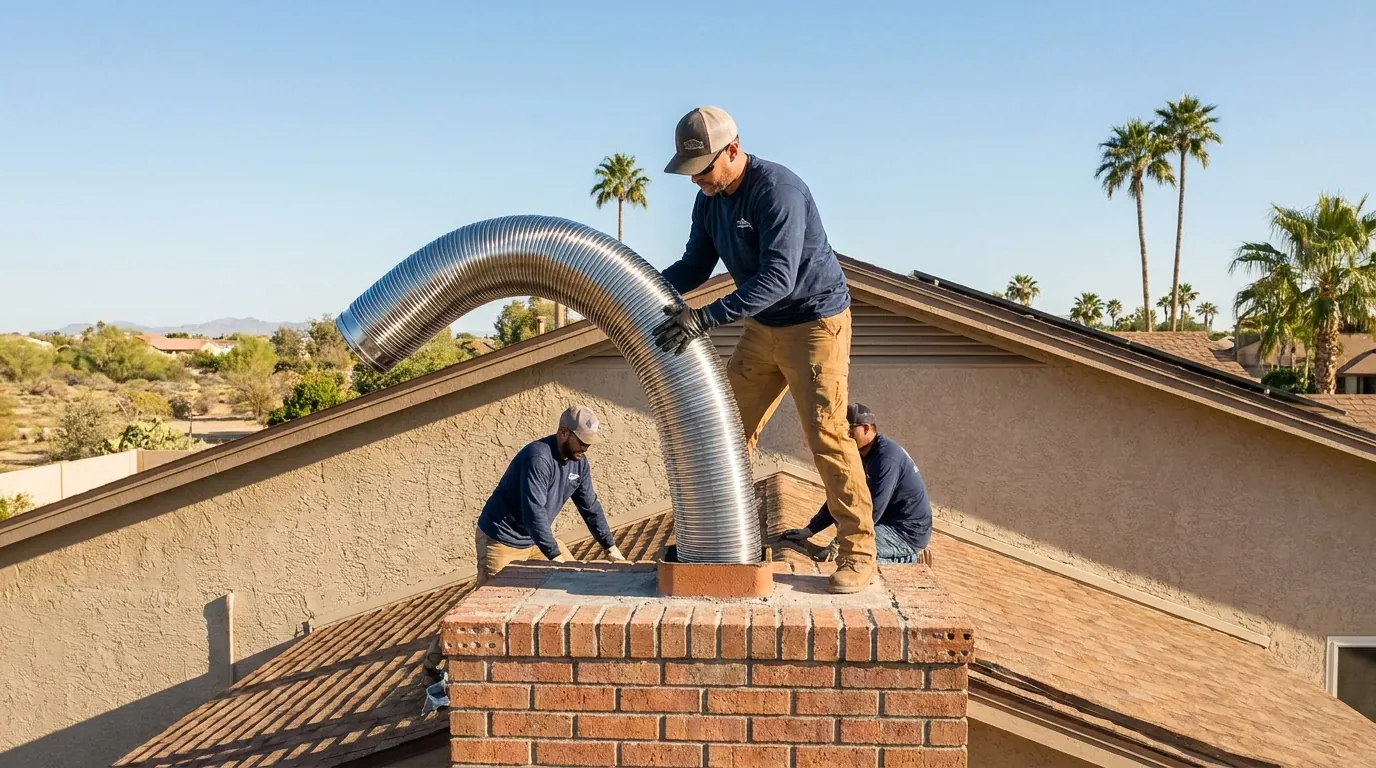
What the flue does and why it fails
The flue is the passage inside the chimney that carries smoke, heat, and combustion gases safely out of the house. Many older chimneys use clay tile flues, and over decades those tiles crack, shift, and lose their mortar joints. Some older stacks were never properly lined at all. A compromised flue is a serious matter: cracks let heat and gases reach the surrounding masonry and framing, and they let moisture into places it should never be. A stainless steel liner installed inside the existing chimney restores a continuous, sound passage.
Signs a flue needs relining include pieces of clay tile falling into the firebox, a chimney that draws poorly or backs smoke into the room, staining and odor that suggest moisture in the flue, and a failed inspection during a home sale. If the top of the chimney has been open to water because of a bad crown or missing cap, the flue often suffers first — which is why relining frequently comes up alongside chimney crown and cap replacement.
How relining is done
Relining threads a new stainless passage down the existing chimney and ties it into the appliance or fireplace at the bottom and the cap at the top.
-
Inspect and measure
The existing flue is inspected and measured so the liner is sized correctly for the fireplace or appliance it serves — an oversized or undersized liner drafts poorly.
-
Clear the way
Loose tile, debris, and any old liner material are removed so the new stainless liner can pass cleanly down the full height of the chimney.
-
Set the liner
The stainless liner is lowered into place, connected at the base, and insulated where needed so it holds heat and drafts efficiently.
-
Terminate and cap
The top of the liner is secured, sealed to the crown, and finished with a cap so the whole system sheds water and vents properly.
Why Gilbert flues wear the way they do
Clay flue tiles do not tolerate movement or repeated wetting well, and Gilbert's climate delivers both. The day-to-night temperature swing works the masonry, and any water that reaches the flue — from a cracked crown, a missing cap, or wind-driven monsoon rain — soaks into the tile and its joints. When a cold night drops temperatures across the freeze line, absorbed moisture expands and cracks the tile. Over years, this is what turns a sound clay flue into a hazard. A stainless liner is not vulnerable to that cycle the way clay is.
Relining is often the point where several chimney problems converge. If water has been getting into the flue, it has usually been getting into the joints too, and tuckpointing and brick repointing may be needed to close those paths. When the exposed stack above the roof is also failing, a chimney rebuild above the roofline is the natural time to set a new liner as the brick goes back up.
Wondering about your flue?
If tiles are falling into the firebox, the fireplace draws poorly, or an inspection flagged the flue, ask us to take a look and explain your relining options.
Serving Gilbert and the wider East Valley.
Frequently asked questions
How do I know my flue needs relining?
Common signs include pieces of clay tile in the firebox, poor draft or smoke backing into the room, moisture staining and odor, and a flue flagged during a home inspection. A camera inspection confirms whether the existing liner is cracked or missing.
Why stainless steel instead of clay tile?
Stainless liners are not vulnerable to the cracking that clay tile suffers from moisture and temperature swings, they can be sized precisely to the appliance for good draft, and they install as one continuous passage inside the existing chimney.
Does relining require tearing the chimney apart?
No. The stainless liner is threaded down the existing flue, so the masonry generally stays intact. Relining is often done alongside crown and cap work at the top rather than by opening the chimney body.
Can a chimney with no liner at all be lined?
Yes. Older unlined chimneys are common, and a properly sized stainless liner gives them a safe, continuous passage for the first time. The existing flue is cleared and measured before the liner is set.