Chimney Leak & Flashing Repair in Gilbert
Chimney leak, flashing, crown and cap repair in Gilbert, AZ. Stop monsoon water from getting into your chimney and ceiling.
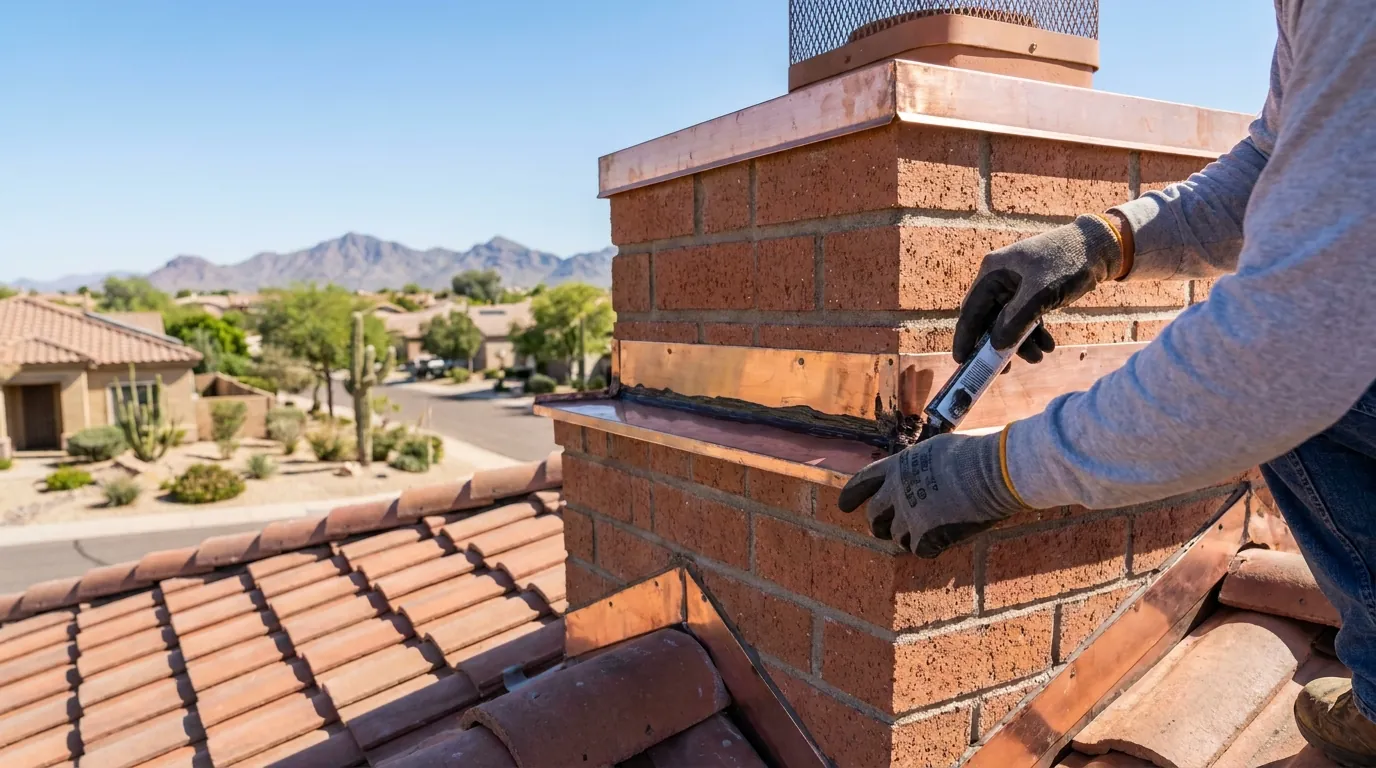
Why chimneys leak in the East Valley
A chimney leak almost always shows up after a monsoon storm. You see a water stain on the ceiling near the chimney, a damp smell in the firebox, or a dark streak running down the brick outside. The frustrating part is that the water rarely enters where the stain appears — it finds a gap high on the stack and travels down inside the structure before it shows up.
The usual entry points are flashing, the crown, and the cap. Flashing is the metal that seals the joint where the chimney meets the roof; when it lifts, corrodes, or the sealant dries out and cracks in the sun, water runs straight down that seam. A cracked crown lets rain pour into the top of the masonry. A missing or rusted cap leaves the flue open to the sky.
This page focuses on stopping water. If your chimney's real problem is crumbling mortar or flaking brick, that's covered on our chimney masonry repair service page, and severely deteriorated stacks are handled under chimney rebuild and installation.
Where the water gets in
Chimney flashing repair, crown work, and cap replacement are the three fixes behind most leaks we find.
-
Flashing repair and replacement
Chimney flashing takes a beating from the sun — sealant dries out and cracks, and the metal can lift over time. We reseal, refit, or replace flashing so the roof-to-chimney seam sheds water instead of funneling it inside.
-
Chimney crown repair
Cracks in the crown are a leading cause of interior leaks. We fill fine cracks or recast the crown entirely with a proper slope and overhang so rain runs off the edge rather than soaking into the brick below.
-
Chimney cap repair
A damaged or missing cap lets rain drop straight down the flue. We repair or replace the cap so the flue opening stays covered and the masonry underneath stays dry.
-
Waterproofing
Once the entry points are sealed, a breathable water repellent on porous brick helps it shed monsoon rain while still letting trapped moisture escape — an extra layer of protection against the next storm.
How a leak repair works
Finding the real entry point matters more than sealing the first crack you see.
-
Trace the leak
We inspect the crown, flashing, cap, and upper mortar joints to find where water is actually entering — often not where the stain appears inside.
-
Repair the source
We patch or rebuild the crown, reseal or replace flashing, and fit a cap as needed, using materials that hold up to the heat-and-monsoon cycle.
-
Waterproof and verify
We apply breathable water repellent where appropriate and confirm the repair sheds water correctly before we finish.
Act before the next monsoon
Water damage compounds. A leak that starts as a faint ceiling stain becomes rusted dampers, ruined drywall, and mortar washed out from inside the stack if it runs through a full monsoon season untouched. The fix is far smaller and cheaper when the flashing or crown is caught early.
If you've spotted a stain, a smell, or a streak down the brick, don't wait for it to spread. Reach out through our contact page and we'll trace where the water is really coming from.
Frequently asked questions
Why does my chimney only leak during monsoon storms?
Monsoon rain is heavy, wind-driven, and comes at odd angles, so it exposes gaps that light rain never reaches. Flashing that's dried out or a hairline crown crack can shed a gentle drizzle but fail under a driving storm, which is why leaks often first appear in monsoon season.
The stain is a few feet from the chimney — is the chimney still the cause?
Often, yes. Water usually enters high on the stack and travels along framing before it drips through the ceiling, so the stain can appear well away from the actual leak. That's why we trace the entry point rather than just patching where the stain shows.
Is flashing repair a masonry job or a roofing job?
It sits between the two. Flashing seals the joint where masonry meets roofing, so it has to be fitted correctly against both. We handle the flashing along with the crown and cap so the whole water-entry system is addressed together.
Will waterproofing alone stop my leak?
Not by itself. Water repellent helps porous brick shed rain, but it won't fix a cracked crown, failed flashing, or a missing cap. We seal the actual entry points first, then apply waterproofing as added protection.
Talk to someone about your job
Call to describe the problem and get a quote for work in Gilbert, AZ.